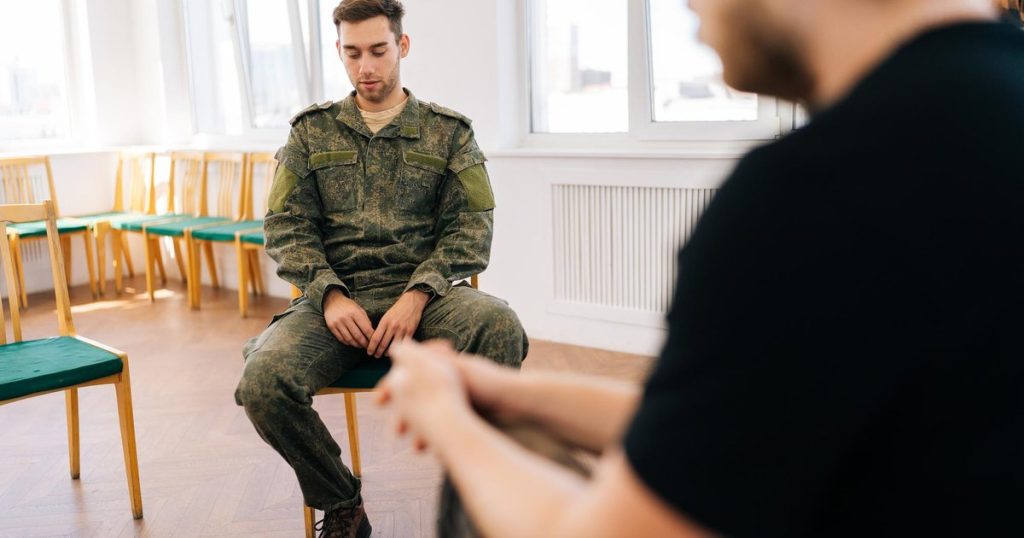
Post 72 members recently took part in suicide prevention training on the Columbia Protocol, led by Brad Lanto, a trainer with the Columbia Lighthouse Project. The Columbia Protocol is a short set of plain, direct questions that anyone can use to tell whether someone may be at risk and how urgently they need help. You don’t need to be a clinician or have mental health training to use it. You only need to be willing to ask.
Veteran suicide is not only a problem for the VA or doctors. It’s a problem for the people who see a veteran every day: family, friends, fellow Legionnaires. The session also reminded us that the people caring for veterans are at risk too, and they’re often the ones nobody checks on.
The recap below covers the key facts from the training, common myths about suicide, and how to use the Columbia Protocol and its free app. It also lists next steps for every member: find out who at our post is already trained, build a list of local resources, and take a follow-up course such as VA S.A.V.E., QPR, or Talk Saves Lives.
If you or someone you know is in crisis, dial 988 and press 1, or text 838255. The Veterans Crisis Line is free, confidential, open 24/7, and there for caregivers and families too.
The Numbers
Brad opened with the latest figures on civilian and veteran suicide. The total number of veteran suicides dropped slightly in 2023, but the rate went up because the veteran population is shrinking. Suicide remains the 12th leading cause of death for veterans. Newer data from the CDC and VA is expected soon.
Who Is at Risk
Firearms remain the most common method of veteran suicide. Brad also pointed to caregivers as an at-risk group: in the figures he shared during the training, 31% of caregivers had considered suicide in the past 30 days.
He walked through seven key risk factors, including disrupted social networks, sleep problems, access to lethal means, relationship problems, and hopelessness.
Brad described two ways to reduce suicide:
- Prevent the pain through economic support and access to care.
- Make an attempt harder through steps like safe storage of firearms and medications.
Suicide prevention has moved from a purely medical model to a public health approach. That approach counts on community gatekeepers — people like us — to notice and act.
Myths and Facts
- Fewer than 1% of people who think about suicide die by suicide. There is time and room to help.
- Prevention isn’t only for clinicians. Community members play a crucial role.
- Limiting access to lethal means works. Brad shared examples from the Israeli military, Indonesia, and Japan, where safety measures significantly reduced suicide rates.
- Asking about suicide does not plant the idea. He used Kevin Hines’s story to show how one person asking could have stopped an attempt.
- Watch the person, not the diagnosis. Focus on risk factors and warning signs rather than mental health labels.
- Words matter. Say “died by suicide,” not “committed suicide.” Suicide is not cowardice or selfishness.
- The impact spreads. Each suicide affects about 135 people.
Using the Columbia Protocol
The Columbia Protocol is a structured set of questions for assessing suicide risk. Brad covered how to ask them: listen actively, don’t judge, and pay attention to your tone and body language. Match the response to the level of risk. If someone is at high risk, stay with them and make a warm handoff to crisis services instead of just handing over a phone number.
He also demonstrated the Columbia Protocol app. It walks you through the screening and points you to local resources.
Questions from Members
Members asked about certificates, further training, and the role of chaplains in suicide prevention. Alexander recommended the American Foundation for Suicide Prevention’s Talk Saves Lives program. For certificates, training materials, or follow-up questions, contact the Columbia Lighthouse Project.
What Every Member Can Do Next
1. Find out who at Post 72 is already trained in the Columbia Protocol. 2. Build a local resource list so help is ready when it’s needed. 3. Take a follow-up training: VA S.A.V.E., QPR, or Talk Saves Lives: Supporting Our Veterans. The American Legion also offers free Be the One sessions on the Columbia Protocol through its Be the One training page. 4. Have questions later? Reach out to the Columbia Lighthouse Project.
—
In crisis? Dial 988, press 1 — or text 838255. Free, confidential, 24/7.

Leave a Reply